
Hmmm religion ,religion extremist need to be tamed or in we are in for a big trouble
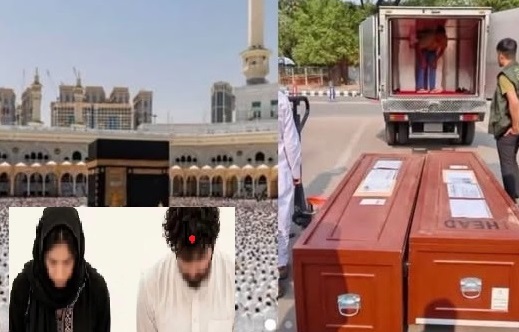
Saudi Arabia reportedly executed two Bangladeshi nationals, Nazrul Islam Abdul Basir and Siti Akhtar, on October 14 over alleged “immoral acts” inside a mosque in Mecca.
But some important questions remain unanswered.
What exactly did they do? Did they have access to lawyers? Were they given a fair opportunity to defend themselves and appeal their death sentences?
Saudi authorities reportedly stated that their sentences were upheld, but that alone does not tell us whether the defendants had a meaningful opportunity to challenge their convictions.
A death sentence is irreversible. Shouldn’t the process leading to it be transparent enough to answer these fundamental questions?
This is not about defending wrongdoing or interfering with another country’s laws. It is about the right to a fair hearing and the need for accountability when human lives are at stake.
Before two lives are taken, shouldn’t we be certain that justice has been done
How was this hastily done.
Should religions undergo reforms to protect human dignity, prevent exploitation and ensure that religious authority is never placed above justice and accountability?
This question has taken on renewed urgency following the execution of two Bangladeshi nationals in Saudi Arabia over what authorities described as indecent conduct inside a mosque in the holy city of Mecca.
The executions have reopened a difficult global conversation about religious laws, the death penalty, freedom of belief and the relationship between faith and fundamental human rights.
WHEN RELIGIOUS LAW AND HUMAN RIGHTS COLLIDE
Saudi Arabia’s judicial system draws heavily on its interpretation of Islamic law.
The kingdom maintains that its laws protect public morality, religious sanctity and social order.
However, human rights advocates have long questioned the application of capital punishment for offences that do not involve intentional killing.
The execution of the two Bangladeshis raises a broader issue: whether religiously influenced criminal laws should be reviewed to ensure proportional punishment, transparency and respect for human dignity.
This debate must not be mistaken for an attack on Islam or Muslims.
Muslims themselves hold diverse views on religious jurisprudence, criminal punishment and the relationship between Islamic principles and modern legal institutions.
Criticising a government’s interpretation or application of religious law is not the same as condemning an entire religion.
CHRISTIANITY, ISLAM AND OTHER RELIGIONS: WHO HOLDS SPIRITUAL LEADERS ACCOUNTABLE?
The need for reform extends beyond any single religion.
In Christianity, concerns have arisen over financial exploitation, fabricated prophecies, alleged miracle fraud and the misuse of pastoral authority.
Within Muslim communities, debates continue over religious interpretation, extremism, the rights of women and minorities, and the application of religious laws.
Traditional religious institutions and other spiritual movements also face questions about accountability, coercion and the treatment of vulnerable followers.
Every religious tradition has its own teachings and institutions. Their problems should not be treated as identical.
Nevertheless, one principle should apply universally:
No religious leader, institution or government should be immune from scrutiny simply because it claims divine authority.
WHEN DID QUESTIONING A RELIGIOUS LEADER BECOME QUESTIONING GOD?
In some religious communities, followers are discouraged from challenging pastors, imams, prophets, priests and other spiritual authorities.
Claims of supernatural encounters, visits to heaven, divine revelations and miraculous healing may be accepted without meaningful examination.
Believers have the right to hold spiritual convictions, but religious leaders also have a responsibility to avoid deception and manipulation.
Questioning a religious testimony does not automatically amount to rejecting God.
And demanding accountability from a spiritual leader should never be treated as an offence against religion.
RELIGION, MONEY AND THE COMMERCIALISATION OF FAITH
Another major concern is the exploitation of financially vulnerable worshippers.
Religious organisations legitimately receive donations to support worship, charity, education and community services.
But problems arise when followers are pressured to surrender money through fear, threats or promises of guaranteed supernatural rewards.
A person struggling to feed their family should not be manipulated into believing that divine intervention depends on making a payment.
Faith should inspire generosity and compassion, not become a business model built on desperation.
SHOULD RELIGIOUS REFORM INCLUDE ABOLISHING CRUEL PUNISHMENTS?
The Saudi executions raise one of the most difficult questions in the reform debate.
Should governments retain capital punishment for conduct classified as religious or moral offences?
Supporters of traditional religious legal systems may argue that governments have a responsibility to protect sacred places and uphold established moral codes.
Critics respond that protecting religious sanctity should never override the principles of proportional punishment, fair trials and the right to life.
The challenge is to distinguish respect for religious beliefs from the state’s use of coercive power.
A society can protect places of worship and uphold public order without assuming that every violation deserves the harshest possible punishment.
REFORM DOES NOT MEAN ABOLISHING RELIGION
Religious reform does not necessarily require believers to abandon their scriptures, traditions or spiritual convictions.
It can mean strengthening safeguards against abuse, improving financial transparency, encouraging education, protecting women and children, and ensuring that allegations of criminal misconduct are investigated independently.
It can also mean allowing serious discussion about how religious teachings are interpreted and applied in contemporary society.
Religion has contributed enormously to charity, education, healthcare, social solidarity and movements for justice.
Those contributions deserve recognition.
But religious institutions should also be willing to confront harmful practices carried out in their names.
THE BIGGEST DANGER IS WHEN RELIGIOUS AUTHORITY CANNOT BE QUESTIONED
A society becomes vulnerable when people are taught that questioning a religious leader is equivalent to challenging God.
Such thinking can discourage victims from reporting abuse, prevent scrutiny of financial misconduct and allow powerful individuals to escape accountability.
The same danger arises when religious laws are treated as beyond discussion, even when their enforcement raises serious questions about fairness and human rights.
No pastor should be above the law. No imam should be above the law. No prophet, priest, religious institution or political authority should be above the law.
THE QUESTIONS THE WORLD MUST ANSWER
If two people can be executed over conduct described only as immoral, without the public receiving a detailed explanation of the offence, what does that mean for transparency and justice?
Should religious leaders be permitted to make extraordinary claims without facing reasonable questions?
Should governments be allowed to impose irreversible punishments in the name of protecting religious sanctity?
Should religious institutions be required to demonstrate financial and ethical accountability?
And can faith remain strong while harmful human practices are challenged?
FINAL THOUGHT
Religion should be a source of compassion, justice and human dignity — not a shield for exploitation, cruelty or the abuse of power.
The execution of the two Bangladeshis in Saudi Arabia is a powerful reminder that debates about religious reform are not merely theoretical.
Sometimes, they involve human lives.
The world must be able to discuss these questions openly, respectfully and without hatred towards any religious community.
WHAT’S YOUR TAKE?
Should all religions undergo reforms to reflect modern standards of justice and human rights?
And do you believe any person should face the death penalty for an offence described as immoral inside a place of worship?
POLITICS RELIGION AND CRIME