
Professor Felix Oragwu: The Brilliant Nuclear Physicist
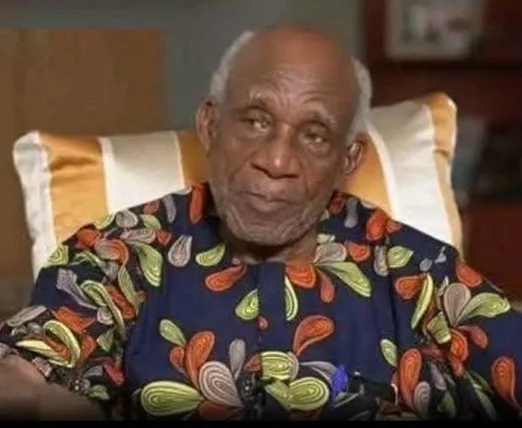
Felix Oragwu
Professor Felix Oragwu: The Brilliant Nuclear Physicist Who Spearheaded Biafra’s “Ogbunigwe” Weapons Engineering and Successfully Processed Palm Oil into Fuel
Professor Felix N. C. Oragwu was born on March 22, 1934 in Abatete, Idemili North Local Government Area of Anambra State. His academic journey started at Christ the King College (CKC) in Onitsha, where his talent for science became obvious.
This passion took him overseas to study at the University of Glasgow in Scotland, followed by advanced postgraduate research in nuclear physics and heavy-ion accelerators at the University of Toronto in Canada and the University of Manchester in England. By the mid-1960s, he was back in Nigeria working as a physics lecturer at the University of Nigeria, Nsukka (UNN), right before the civil war broke out in 1967.
When the war started and Biafra was hit with a total blockade that cut off weapons, fuel, and medical supplies, the regional leadership set up the Research and Production (RAP) unit to find local solutions for survival. Professor Felix Oragwu was appointed the Head of Research Planning and Coordinator of Technological Services. Working alongside other top scientists like Professor Benjamin Nwosu and Professor Gordian Ezekwe, he became the technical coordinator behind some of the most famous wartime inventions in African history. He directly oversaw the design and manufacturing of the “Ogbunigwe” weapon system, converting local materials into landmines, grenades, and aerial bombs that sustained the region’s defense for nearly three years.
Beyond weapons, his team faced a massive fuel crisis due to the blockade.
Under Professor Oragwu’s technical supervision, the RAP team successfully engineered a way to process native palm oil, palm kernel extracts, and locally drilled crude into functional bio-blended fuel. This alternative fuel kept military trucks, transport vehicles, and power generators running throughout the conflict. His unit also designed and built modular, local “cooking pot” mini-refineries across the region, creating a working blueprint for modular oil refining decades before it became a major topic in modern Nigeria.
Post-War Career and National Impact
Following the conclusion of the war in January 1970, Professor Felix Oragwu briefly returned to lecturing and research at UNN before his unique expertise caught the attention of the federal government. Moving past wartime divisions, the Nigerian Federal Government invited him to Lagos, where he served from 1972 to 1976 as the pioneer Principal Scientific Secretary and Chief Scientist to the newly created Nigerian Council for Science and Technology (NCST). To further sharpen his strategic leadership, he traveled to England in 1975 to undertake a Senior Executive Course on Science Policy Planning at the Institute of Development Studies, University of Sussex.
Chief Scientist (1972–1976): Served as the Pioneer Principal Scientific Secretary and Chief Scientist at the Nigerian Council for Science and Technology (NCST).
Ministry Director: Transitioned to leadership roles within the Federal Ministry of Science and Technology, serving as the Director of Industrial Research and Technology, and later as the Director of Science and Technology Policy.
Author and Advocate: Authored comprehensive works on leveraging science, indigenous technology, and institutional policy to drive economic development across Africa
His contributions to Nigeria’s national science infrastructure grew rapidly.
In 1977, he was appointed the pioneer Director of Industrial Research and Technology, and later the Director of Science and Technology Planning and Development for the National Science and Technology Development Agency (NSTDA). By 1980, when the Federal Ministry of Science and Technology was newly established, Professor Oragwu was named its very first Director of Science and Technology Policy, Planning, and Development, a role he held until 1987. During this period, he traveled to Moscow in 1982 for an advanced executive course at the USSR Academy of Sciences to study international models of technological development.
Between 1976 and 1987, Professor Oragwu became the primary intellectual and administrative force behind the creation of some of Nigeria’s most vital public research institutions. He was instrumental in establishing the Projects Development Institute (PRODA) in Enugu under federal oversight, the Science Equipment Development Institute (SEDI) in Enugu, the National Office for Technology Acquisition and Promotion (NOTAP), and the Raw Materials Research and Development Council (RMRDC). His core vision was to build an independent, domestic capacity for Nigeria to manufacture its own modern technologies and industrial goods.
He introduced Nigeria’s first-ever Annual Scientific Research Grant Budget to fund university research, structured the operations of the Ministry of Science and Technology, and mandated that all public industrial research centers house engineering design and fabrication divisions on their workshop floors. In recognition of these immense contributions, the Federal Government elevated him in 1986 to the salary and status rank of a Federal Permanent Secretary and Director-General on absolute “Personal Merit.”
Even after his formal retirement from the Federal Public Service, his brilliant mind remained in high global demand. He transitioned into an international Technology Development Consultant, advising top global organizations including the United Nations Economic Commission for Africa (UNECA) in Addis Ababa, the UNDP, the UNIDO in Vienna, and the Commonwealth Science Council in London.
His global leadership peaked in 1987 when he served as the Chairman of the 9th Session of the United Nations Intergovernmental Committee in New York, coordinating science and technology policies for developing countries across Africa, Asia, and Latin America. Back home, he also gave back to higher education by serving on the Governing Councils of the Federal Universities of Technology in Owerri, Makurdi, and Abeokuta during the early 1980s.
Professor Oragwu holds the esteemed traditional title of Eze Chinemelu Abatete, and in March 2026, he celebrated his milestone 92nd birthday.
As the modern world finally embraces sustainable bio-fuels, Felix Oragwu experiments from over 50 years ago are being viewed in a completely new light. At 92 years old, he remains a monumental icon of what can be achieved when raw scientific intellect is paired with an unyielding commitment to national and structural development.