
US Army Rangers ASSAULT Iranian Mountain Weapons and Missile Facility
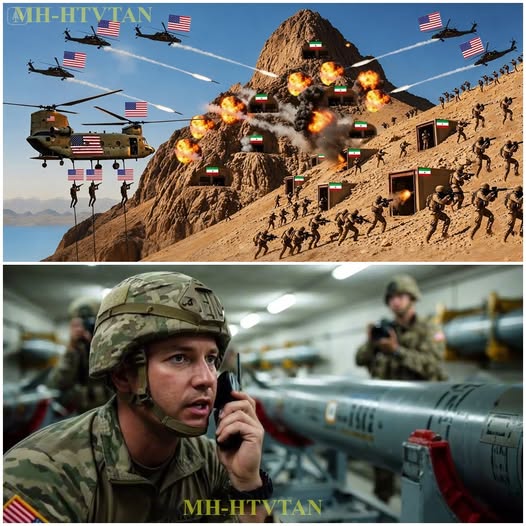
Zagros Mountains, northern Iran. 8 in the morning. 80 US Army Rangers from the 75th Ranger Regiment were advancing toward their target on foot, carrying enough explosives to collapse an entire mountain. Their target was an Iranian underground weapons and missile storage facility hidden 200 m deep inside the mountain.
For 3 years, Iranian forces had been stockpiling weapons in this facility because they believed the remote location kept it safe from attack. However, American intelligence had been tracking the site for 18 months, documenting every delivery and calculating the growing arsenal inside. The facility contained three separate tunnel systems carved into the mountain.
First, the northern tunnel stored 150 ballistic missiles, including Shahub 3 medium-range missiles and Fatef 110 short-range tactical missiles. Second, the southern tunnel held thousands of heavy weapons. Inside this massive storage area, racks contained 500 RPG rocket launchers, 200 mortars of various calibers, 300 heavy machine guns, and 400 anti-tank missile systems.
Third, the central tunnel served as the command center where Iranian officers managed the facility and maintained detailed inventory records on computer systems. Outside the tunnels, Iranian forces had established defensive positions across the rocky terrain. 60 soldiers manned fighting positions on the slopes approaching the facility.
Each tunnel entrance was reinforced with concrete and defended by troops with heavy weapons. To support these positions, the Iranians had installed mortars in elevated locations and placed mines along the approach routes. Because of all these preparations, the facility commander believed these defenses made the facility impregnable.
But American planners saw vulnerabilities in this seemingly impregnable position. While the mountain location appeared to be a strength, it also created significant limitations. For one thing, the defenders could not retreat or receive reinforcements easily. Furthermore, the tunnel entrances were choke points that became traps once breached.
Most importantly, destroying the tunnels would collapse the entire facility and everything inside. Days earlier, the mission had been assigned to the 80 rangers who were carefully organized into four teams. Each team had a specific objective, and according to the plan, the entire operation would unfold simultaneously across multiple fronts.
In preparation for this mission, the Rangers had trained extensively for mountain operations and close quarters combat in tunnels. Earlier that morning at 5, the four Blackhawk helicopters had lifted off, carrying the Rangers toward their target. Two Apache attack helicopters flew escort, ready to provide fire support.
After nearly 2 hours of lowaltitude flying at 6:45, the helicopters landed 8 km from the facility in a narrow valley. Upon landing, the Rangers moved out immediately, spreading into their assigned teams and beginning the approach march. moving quickly but carefully across the rocky terrain. They used trees and vegetation to avoid detection.
During this advance, they maintained complete radio silence. Alpha team consisting of 20 rangers headed toward the northern tunnel where the missiles were stored. At the same time, Bravo team moved toward the southern weapons storage tunnel. Charlie team approached the central command tunnel. Meanwhile, Delta team positioned themselves to suppress the outer defensive positions and provide support to the other teams.
The Rangers covered the 8 kilometers in 70 minutes, reaching their assault positions at 8 in the morning. Upon arrival, they took cover behind boulders and rock formations, carefully observing the Iranian positions through their scopes. Fortunately, no one spotted them. Some sentries walked their post routinely, while others sat in fighting positions, scanning the valley below, completely unaware of the approaching danger.
At 8:15, the two Apache helicopters appeared over the mountain ridge. The Apaches immediately engaged the outer defensive positions with rockets and cannon fire. Within seconds, explosions erupted across the mountainside as the helicopters destroyed mortar positions and fighting positions. The Iranian defenders scrambled for cover as the attack began